Responsible Resource Management

Responsible resource management, including water and waste management, is an important element of our sustainability strategy, helping us reduce our impact while improving efficiency and reducing costs. Our current focus is on reducing our waste footprint, coupled with the responsible disposal of the waste we produce. We also seek to promote responsible water stewardship. Because our real estate portfolio consists exclusively of leased properties and the majority of our offices are located in multi-tenant buildings and smaller coworking arrangements, at present we are not able to comprehensively track and manage waste and water metrics. That said, we are working toward improving our collection of waste and water metrics.
Recycling and Composting
We seek to divert waste from landfills by leveraging municipal recycling and composting programs where they exist. For offices that do not have silverware and china, we use compostable utensils, plates, and cups.
In the most recent fiscal year, we collected waste information for seven offices, representing 63.1% of our total real estate portfolio by square footage.
Kuala Lumpur Office Waste Diversion
At our Kuala Lumpur office, GreenGuide ERG members collected unwanted textiles and clothing for recycling and repurposing through our partnership with the nonprofit, Kloth Circularity. Over the four-week collection period, we successfully recycled 64 kg of fabric.
Additionally, during Earth Month, the Kuala Lumpur Workplace team launched a new coffee waste recycling program. This initiative makes coffee grounds available to employees every day to bring home as composting, plant fertilizer, natural deodorizer, body scrub, and other alternative uses.
Sustainability at our Bengaluru Office
At the start of fiscal year 2026, we will be relocating our Bengaluru office. The space was designed with LEED Platinum certification as a goal and includes resource efficiency initiatives, such as high-efficiency plumbing and rainwater harvesting; advanced energy-efficient systems; use of sustainable and locally sourced materials; and a robust waste management program to divert construction waste. The building also prioritizes indoor air quality with low-emitting materials, enhanced ventilation systems, and natural light. The design process and finished space sets a standard for our future office design projects.
E-Waste Circularity and Recycling
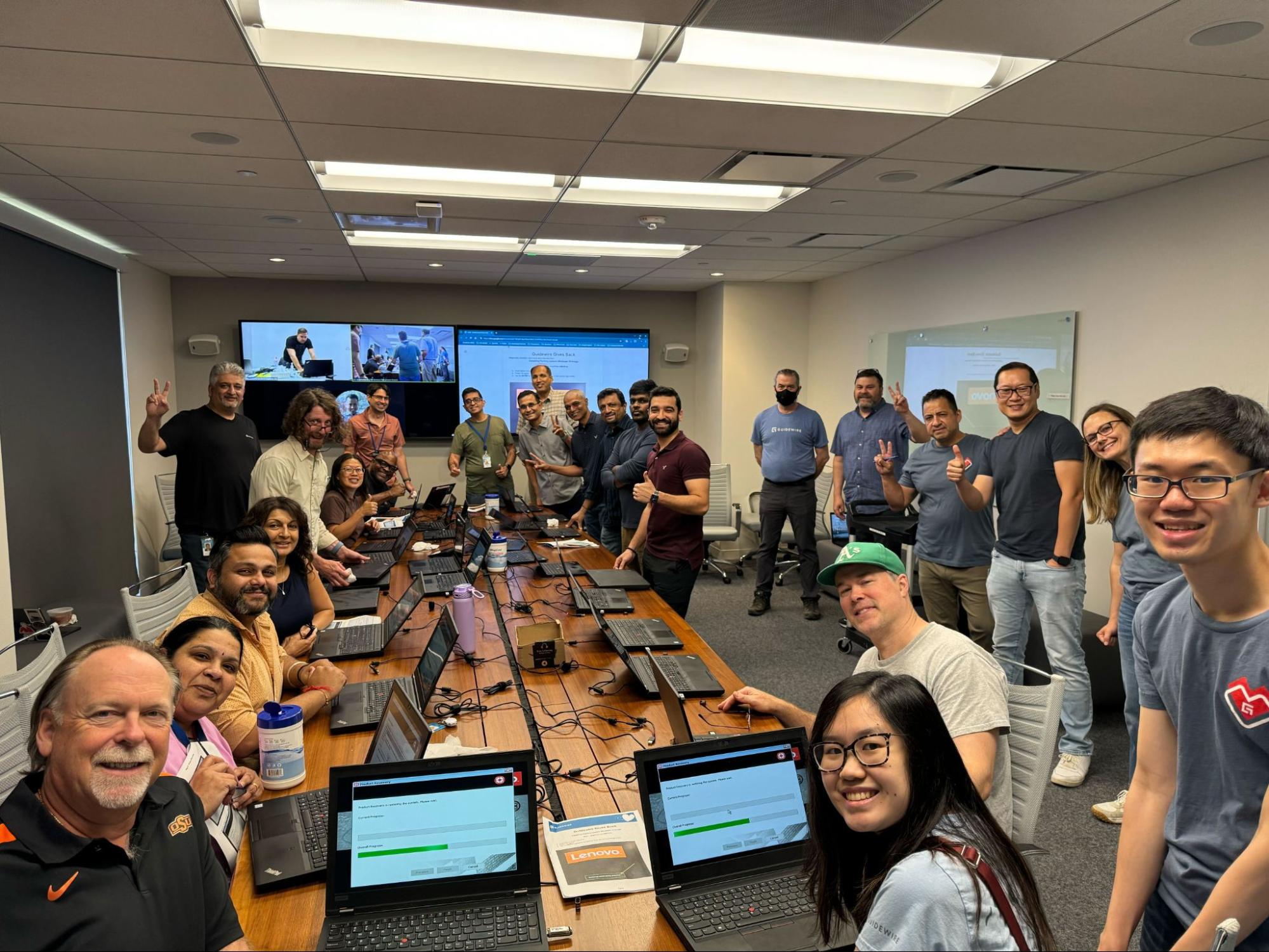
We currently provide a nonprofit hardware donation program for a limited amount of out-of-warranty Windows laptops. We host in-person volunteer events at our offices, where employees assist in preparing the laptops for donation by restoring laptops to their original equipment manufacturer operating system. This program promotes circularity by extending the lifespan of electronics goods, resulting in reduced electronic waste while providing our employees with an impactful skills-based volunteer opportunity. Additionally, all nonprofit recipients of our in-kind hardware donations are chosen by our employees.
We continue to partner with our e-waste recycler, Evergreen IT, to responsibly dispose of older computer hardware, monitors, and peripherals. Whenever our e-waste recycler cannot provide recycling services, we directly contract with the landlord or local e-waste recycle providers. In our most recent fiscal year, we recycled close to a thousand pieces of electronic equipment and more than 600 lb of electronic waste material, such as wires and cables. Additionally, we donated more than 170 pieces of electronic equipment to nonprofits.
Further, we are committed to procuring ENERGY STAR® and energy efficient laptops and monitors globally.
Green Machine and Zero-Touch Provisioning
For over five years, we have utilized our “Green Machine” program, enabling contractors to use a virtual desktop without the need for a Guidewire-issued computer. This transition promotes resource efficiency by reducing the number of Guidewire-issued laptops (lowering potential e-waste from our operations) and eliminating the shipping of computers to contractors. In the most recent fiscal year, the program included approximately one thousand Green Machines for contractors, sustaining a pattern of growth since we started the program. We also expanded the geographic availability of such Green Machines.
Water Stewardship
We seek to demonstrate water stewardship by reducing water consumption and using water conservation strategies in our operations. For example, we give preference to new lease options that provide low flow faucets and toilets. In our most recent fiscal year, we collected water consumption information for eight of our offices, about 54.5% of our real estate portfolio by square footage. We did not collect water withdrawal information for any of our offices during this period.
We began assessing water stress in the regions where our offices are located in fiscal year 2024. Currently 32% of the offices in our real estate portfolio are in regions with high or extremely high baseline water stress and 24% of the offices in our real estate portfolio are in regions with medium-high baseline water stress, for a total of 56% of our office locations in regions with medium to high, high, or extremely high baseline water stress as measured by the World Resources Institute's Water Risk Atlas Tool, Aqueduct.
Regarding water withdrawal and consumption for hardware infrastructure, we use a third-party data center operator (AWS) and do not operate on-premises data centers.
Looking Forward
At present, we are not able to comprehensively track and manage waste and water metrics due to our real estate portfolio consisting exclusively of leased properties and the majority of our offices being located in multi-tenant buildings and smaller coworking arrangements. That said, we are working toward improving our collection of waste and water metrics.